
Theses
Primary Products of Symbiotic Nitrogen Fixation PhD 1965
The Metabolism of Inorganic Nitrogen and Its Environmental Effects DScAgric 1992
Member Convocation of University of WA 1965-2023
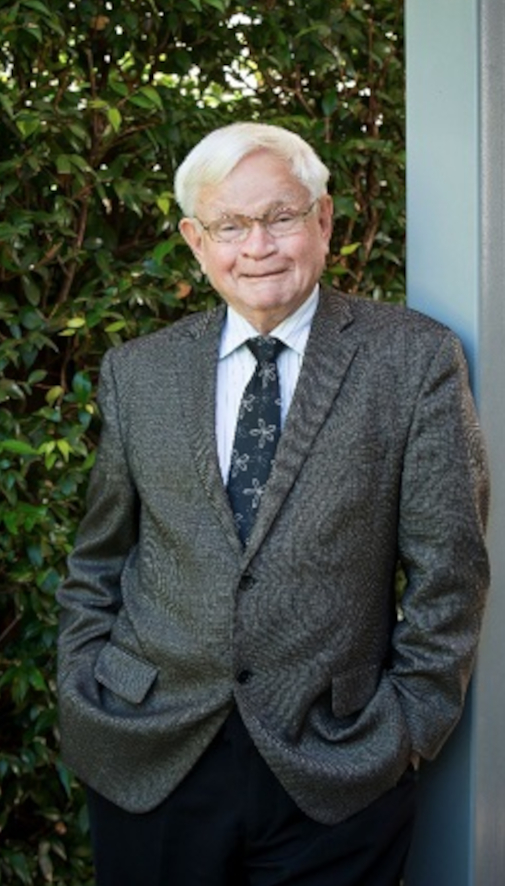
2026: Professor Emeritus in Agricultural and Environmental Chemistry, Faculty of Science, School of Life & Environmental Sciences, Institute of Agriculture. University of Sydney Office: Rm 745, G08. Email: [email protected]. 04134071796
A Fellow of the Royal Australian Chemical Institute and a Member of the Order of Australia (AM) awarded (2019) for contributions to Agriculture and Higher Education.
Appointed Lecturer in Agricultural Chemistry in 1968, Senior Lecturer in 1971, Reader in 1989 and to Chair in Agricultural and Environmental Chemistry in 1995.
A continuing Councillor of the University of Sydney Association of Professors.
Research Focus and Teaching
Three main themes: Biological nitrogen fixation and, risk management of toxic pesticides and mycotoxins and action in ecosystems setting boundaries. Competitive and contract funding estimated at $15M as numerous grants from ARC, ACIAR (Vietnam, Indonesia), World Bank (Vietnam), AusAID (Vietnam), DFAT (Sri Lanka), GRDC, RIRDC, CRDC, LWRRC, Cotton CRCs (1993-2012) and independent trials for several agrochemical producers to satisfy the APVMA. Almost fifty postgraduate degrees supervised by thesis were completed from 1973-2014, 11 of whom later became Professors or Chief Research Scientists. He research is strongly cross-disciplinary, with ResearchGate listing 248 papers, plus 44 book chapters collaboratively. His 11 books include Action in Ecosystems: Biothermodynamics for Sustainability, RSP Baldock UK,2001, Rational Environmental Management of Agrochemicals, ACS Symposium Series 966, Kennedy, I.R., Solomon, K.R. et al., 2007 and several international books on quality control supported by ACIAR. His highly cross-disciplinary research is well cited, with a Google h-index of 52 in 2026 and over 11,000 citations. Teaching to senior students was always research focussed, including laboratory and field exercises and field trips.
Career Highlights
Fulbright Fellowship, Purdue University (1966-1968).
Stagiaire, Sabbatical in Department of Plant Biology, University of Nice (1974).
Fellowship Australian Academy/Academia Sinica (Acidification of Ecosystems) (China, 1988).
Professor on Staff, Métabolisme Végétal, Institut Pasteur, Université de Paris (1992).
Director, Sydney University N2 Fixation Centre (SUNFix, 1995-2012) & 19 Symposia to 2018.
Rockefeller Bellagio CenterAward, Biological Nitrogen Fixation, 1997.
Convenor 8th International Symposium on Nitrogen Fixation with Non-Legumes, 2000.
Cotton Researcher of the Year 2005 ($3000 CSD Award).
World Bank Marketplace Award, Washington (2008-2012): Agriculture Green Future Vietnam
Visiting Professorship, Tianjin University of Science and Technology (2009-).
Several major ACIAR/AusAID Projects on toxins in food and the environment in Vietnam, Indonesia, Sri Lanka, Timor Leste. RACI Pacifichem Agrochemicals Coordinator American Chemical Society 5-yearly 2000-2021. Sabbaticals in Nice, Leiden, Oxford (Pembroke College), Utrecht, Munich and Tennessee (2008, 2009).
KEY RESEARCH PROGRAMS
Biological Nitrogen Fixation and Environmental Nitrogen Cycling
Evidence from Honours research for recently discovered glyoxylate cycle enzymes, isocitrate lyase and malate synthase, in nitrogen-fixing Azotobacter vinelandii growing on acetate, 1962; Ninhydrin release of amino-N in 15N-labelled for isotopic pulse and time course labelling wth 15N2 1964. Global proof of sequence of primary products of N2 fixation in legumes, ammonia, the glutamine amide-N, amino acids and the final amide asparagine from Rhizobium lupini bacteroids of serradella nodules, confirmed using pulse labelling with 15N2. This sequence required subsequent discovery of glutamate synthase by others, soon afterwards. Proof with Lex Parker that the rhizobia bacteria contained the nitrogenase enzyme, not an enclosing symbiosome plant membrane. Global proof with Len Mortenson at Purdue, using purified nitrogenase enzyme components of the following stoichiometric reaction in Clostridium pasteurianuum1968, employing purified ferredoxin (Fd):
N2 + 8Fd-reduced + 16ATP + 16H2O => 2NH3 + H2 + 8Ferredoxin + 16ADP + 16H2PO4–.
Proof was repeated testing purified N2ase from lupin nodule bacteroids, showing allosteric kinetics for ATP using acetylene and cyanide as substrates for ethylene and memtane, 1973.
Purification and immunolocation of glutamine synthetase and glutamate dehydrogenase in lupin nodules 1984. A CSIRO Postdoctorate with HL Kornberg in Leicester, while working on Clostridium kluyveri with Gareth Morris. Subsequently, extensive research on plant-soil growth promoting organisms (PGPR) rwas conducted with AusAID or PSLP or ACIAR funding in Vietnam and Sri Lanka. In 2008, World Bank support in Washinton to support this area was awarded.
Books: (a) Kennedy, IR (1986, 1992 2nd edition) Acid Soil and Acid Rain, RSP/Wiley UK.
(b) Murrell W, Kennedy IR, Microbiology in Action, Eds. 1988, RSP/John Wiley, UK.
(c)Kennedy, I.R. and Cocking, E.C. (1997). Biological Nitrogen-fixation : The Global Challenge & Future Needs, A position paper. The Rockefeller Foundation Bellagio Conference Centre, Lake Como, Italy, April 8-12, 1997. ISBN 1-86451-364-7.
(d) Efficient Nutrient Use in Rice Production in Vietnam Achieved Using Inoculant Biofertilisers SMCN/2002/073: Proceedings of a project workshop held in Hanoi, Vietnam, 12–13 October 2007; Eds: I.R. Kennedy, A.T.M.A. Choudhury, M.L. Kecskés and M.T. Rose. ACIAR (Pr130).
(e) Deaker R, Kecskes L, Rose MT, Amprayn Khanok-on, Krishnen G, Tran Thi Kim Cuc, Vu Thuy Nga, Phan Thi Cong, Nguyen Thanh Hien and Kennedy IR (2011) Practical methods for the quality control of inoculant biofertilisers. ACIAR MN147, 82 pages. https://www.aciar.gov.au/publication/books-and-manuals/practical-methods-quality-control-inoculant-biofertilisers
Risk Assessment of Ecotoxinsin Food and Environment with Establishment of Best Management Practices. Development of probabilistic risk methods, analytical and immunological quick tests for pesticides, herbicides and mycological toxins such as aflatoxins including endosulfan, DDT and herbicides, with 5-year Post-doctoral appointments for Shuo Wang and Nanju Alice Lee, funded by AusAID and ACIAR with numerous student training Workshops in Vietnam, Indonesia and Timor Leste. This technology included formatting into immunological Quick Tests for specific screening in the environment and agricultural produce. See Gemini AI below. Confidential Consultancies have also been conducted for many chemical producing companies or Users, providing access to new chemical subjects to approval from our field trials by the APVMA, then based in Canberra (e.g. CropCare ICI, Bayer, Dow, Dupont, Cochlear, Arvesta, Unison Pacific, Rhone Poulenc, Cyanamid, etc.). This included the failing assessment of Helix (chlorfluazurin) found illegally in feedstock, eventually banned and preventing export of Australian beef products for an extended period. Our viewpoint was independent, aiming to encourage safe practices for proprietary advantage.
Books: (a)Safer Selection and Use of Pesticides: Integrating risk assessment, monitoring and management of pesticides. Crossan AN, Nguyen Thi Thu Trang, Pham Ngboc Ha and Kennedy IR, eds. 2005, ACIAR Monograph 117 AC IAR.
(b)Rational Environmental Management of Agrochemicals: Risk Assessment, Monitoring, and Remedial Action, Ivan R. Kennedy, Keith R. Solomon, Shirley J. Gee, Angus Crossan, Shuo Wang, and Francisco Sánchez-Bayo, eds. ACS 966, 370 pp. Oxford University Press, Washington DC 2007.
Least Action and Virial-action Mechanics in Ecosystems: Climate Change Science
A reinterpreting of the Carnot Cycle and La Grange’s Principle of Least Action as Action Mechanics in gases, showing how the entropy and Gibbs energy of atmospheric gases can be estimated with accuracy. Entropy, expressed as a Boltzmann logarithmic function of Planck’s quantum of molecular action, allows absolute values for Gibbs quantum field energies to be estimated establishing statistical temperature, enabling kinetic rates of reaction, work processes and equilibrium constants to be estimated.
Virial-action temperature gradients in the atmosphere near 6.5 K per km provide a more credible hypothesis of tropospheric structure to the tropopause, displacing adiabatic lapse rates of 9.8 K per km; established by heating green-house gases (GHG), heat absorption also powers atmospheric gravitational work as a function of surface temperature. GHG both warm and cool the atmosphere, with CO2 acting more effectively for cooling as long wave radiation at higher altitude, providing a Le Chatelier feedback on warming at lower altitude by water. Carbon cycling as CO2 both warms and cools the atmosphere as does water and other GHG, allowing water to overlap CO2 absorption giving independent warming, as well as heating in turbulent wakes, acting anthropogenically.
Books: (a) Kennedy IR (2001) Action in ecosystems: Biothermodynamics for sustainabilty. Research Studies Press UK.
(b) Kennedy IR (2023) Least action and quantum-fields: New methods for calculating the energy of systems and reactions. Scientia / https://doi.org/10.33548/SCIENTIA946.
Recent peer-reviewed publications since Ivan Kennedy was awarded Professor Emeritus in the Faculty of Agriculture and Environment 2011 unanimously by the University Senate.
- Obaid, Nadia Binte; Patyi, András; Berckx, Fede; Klages, Kilian; Bernal-Gómez, Maru; Lavello, Andrea; Jentzen, Jesse; Brachmann, Andreas; Wibberg, Daniel; Blom, Jochen; Kalinowski, Jörn; Mehrabi, Sara; Kennedy, Ivan R.; Normand, Philippe; Mathesius, Ulrike; Katharina Pawlowski (2026) In the nodule or on the nodule? The hidden Frankia biodiversity in Casuarina nodules across continents. Plant and Soil, In press. ID: PLSO-D-26-04320
- Kennedy, Ivan R., Hodzic, Migdat & Crossan, A.N. (2025) Gibbs Quantum Fields Computed by Action Mechanics Recycle Emissions Absorbed by Greenhouse Gases, Optimising the Elevation of the Troposphere and Surface Temperature Using the Virial Theorem. Thermo 5, 25. https://doi.org/10.3390/thermo5030025
- Kennedy, Ivan R., Runcie, John, Crossan, Angus N., Ritchie, Raymond J. & Marohasy, Jennifer (2025) A Thermal Acid Calcification Cause for Seasonal Oscillations in the Increasing Keeling Curve. Cornell arXiv preprint https://doi.org/10.48550/arXiv.2505.06253
- Kennedy, Ivan R., Runcie, John W., Crossan, Angus N. & Ritchie, Raymond. N. (2025) Has Seasonal Ocean Calcification Been Overlooked as a Cause of the Increasing Keeling Curve? A Thermal Acidifying Calcification Hypothesis. Advances in Oceanography & Marine Biology 4(3).1-8. https://irispublishers.com/aomb/pdf/AOMB.MS.ID.000590.pdf
- Kennedy, Ivan R., Crossan, Angus N., Runcie, John W. & Ritchie, Raymond J. (2024) A New Look at Physico-Chemical Causes of Changing Climate: Is Strong Acid Production Lowering the Surface pH Value a Continuing Cause of Increasing pCO2 in the Earth’s Atmosphere? Preprint: 31 July 2024. https://doi.org/10.20944/preprints202403.1601.v2
- Kennedy, I.R., Rose, M.T. & Crossan, A.N. (2023) Improved Numerical Plotting of Elliptical Orbits Using Radial Action Coordinates — Has the Symmetry of Leibniz Radial Theory Based on Inertia Versus Gravity been Ignored? https://doi.org/10.48550/arXiv:2302.01768
- Kennedy, I.R. & Hodzic, M. (2023) Applying the Action Principle of Classical Mechanics to the Thermodynamics of the Troposphere. Applied Mechanics 4, 729-751. https://doi.org/10.3390/applmech4020037.
- Kennedy, I.R., Hodzic, M., Crossan, A.N., Acharige, N., & Runcie, J.W. (2023) Estimating Maximum Power from Wind Turbines with a Simple Newtonian Approach. Archives of Advanced Engineering Science 1, 38-54. https://doi.org/10.47852/bonviewAAES32021330
- Kennedy, Ivan R., Runcie, John W., Zhang, S., & Ritchie, Raymond J. (2022) A New Look at Physico-chemical Causes of Changing Climate: Is the Seasonal Variation in Seawater Temperature a Significant Factor in Establishing the Partial Pressure of Carbon Dioxide in the Earth’s Atmosphere. Thermo 2022, 2(4), 401-434,https://doi.org/10.3390/thermo2040028
- Kennedy, I.R. & Hodzic, M. (2021) Action and Entropy in Heat Engines: An Action Revision of the Carnot Cycle. Entropy 23 (7), 860. https://doi.org/10.3390/e23070860
- Kennedy Ivan R. &Hodzic, Migdat (2021) Partitioning entropy with action mechanics: Predicting chemical reaction rates and gaseous equilibria of reactions of hydrogen from molecular properties. Entropy 2021, 23(8), 1056, https://doi.org/10.3390/e23081056
- Kennedy, I.R., Hodzic, M., Crossan, A.N., Acharige, N. and Runcie, J. (2021) A new theory for estimating maximum power from wind turbines: A fundamental Newtonian approach. Cornell arXiv preprint arXiv:2110.15117.
- Kennedy, Ivan R. (2020) Risky solution: The flawed case against glyphosate. Chemistry in Australia, May-June https://raci.org.au/viewdocument/chemistry-in-australia-may-june-1. See pages 16-20. Royal Australian Chemical Society.
- Kennedy, I., & Hodzic, M. (2019). Testing the hypothesis that variations in atmospheric water vapour are the main cause of fluctuations in global temperature. Periodicals of Engineering and Natural Sciences (PEN), 7(2), 870. https://doi.org/10.21533/pen.v7i2.437 Download Here
- Kennedy, I., Geering, H., Rose, M., & Crossan, A. (2019). A simple method to estimate entropy and free energy of atmospheric gases from their action. Entropy, 21, 454. https://doi.org/10.3390/e21050454
- Kennedy, Ivan R. and Ganguli, Nishath (2016) N2-fixing trees for profitable farm forestry. Agriculture & Forestry, 62. 29-36, Podgorica.DOI: 10.17707/AgricultForest.62.1.02.
- Kennedy, Ivan R. (2015) Computation of planetary atmospheres by action mechanics using temperature gradients consistent with the virial theorem. Int. J. Energy and Environ. 9, 129-146.
- Kennedy, I.R., Rose, M.T., Crossan, A.N. and Burns, M. (2013) Research and practice: environmental action for improving water quality in cotton catchments since 1990. Crop Pasture Sci., 64, 1095–1111. https://doi.org/10.1071/CP13091
Climate science related papers shown bold.
See Google Scholar back to 1963.
Gemini Ivan on pesticide residues: 25/12 /25 (provided independently by Rafe Champion)
Request: Tell me about Ivan Kennedy’s work on pesticide residues in 900 words.
Professor Emeritus Ivan R. Kennedy, an eminent figure in Agricultural and Environmental Chemistry at the University of Sydney, has dedicated decades of research to the detection, risk management, and remediation of pesticide residues.1 His work is characterized by a “planetary interest,” seeking to balance the agricultural necessity of pest control with the imperative of protecting ecosystems and human health.2
Kennedy’s contributions to the field of pesticide residues are multifaceted, ranging from developing rapid analytical tools to mapping long-term environmental contamination and advocating for evidence-based risk assessment.
Innovations in Detection: The ELISA Revolution
One of the most significant pillars of Kennedy’s work is the development and validation of Enzyme-Linked Immunosorbent Assays (ELISA) for monitoring pesticide residues.3 Historically, detecting pesticides like DDT or endosulfan in soil and water required expensive and time-consuming gas chromatography.4 Kennedy and his team, including notable researchers like Alice Lee and Shuo Wang, pioneered the use of immunoassays as a cost-effective alternative.
These ELISA tests utilize polyclonal or monoclonal antibodies to identify specific chemical “haptens.” By refining these assays, Kennedy enabled high-throughput screening of environmental samples. His research demonstrated that these immunoassays, when properly validated against traditional instrumental techniques, provide the “realistic and comprehensive data” necessary for authorities to make informed risk management decisions.5
Mapping the “Unwanted Legacies”: DDT and DDE
Kennedy’s research provided critical insights into the persistence of organochlorine pesticides in Australian soil, particularly in the cotton-growing regions of northern New South Wales (NSW).6 Despite the 1982 ban on DDT, Kennedy’s studies in the late 1990s and early 2000s—utilizing the aforementioned ELISA techniques combined with Geographical Information Systems (GIS)—revealed widespread residues of DDE (the primary metabolite of DDT).7
Key findings from his mapping projects in the Macintyre, Gwydir, and Namoi valleys include:
- Vertical Distribution: Kennedy found that more than 90% of DDT residues remain in the top 10 cm of the soil profile.8 Because of their extremely low water solubility, these residues do not typically leach into groundwater but instead move through the environment via soil erosion or “cracking” in Vertisols.
- Bioavailability and Risk: His work highlighted that while the risk to livestock via drinking water is minimal, the real danger lies in the “soil-to-biota” pathway. Kennedy demonstrated that birds and soil organisms continue to ingest DDE residues decades after the chemicals were last applied.
Risk Management and “Rational Action”
Kennedy’s philosophy is rooted in the idea of Rational Environmental Management.10 He argues that because chemicals are often the “last line of defense” for food security, the public must be assured through rigorous monitoring and risk assessment.
He has been a vocal proponent of using fugacity models to predict the partitioning and transport of pesticides across different environmental compartments (soil, air, water, and vegetation). These models act as screening tools to identify which chemicals pose the highest off-site risk.11 Furthermore, Kennedy has edited major works, such as Rational Environmental Management of Agrochemicals, which advocate for a shift from simple “quotient methods” (toxicity divided by exposure) to more sophisticated, tiered risk indicators like the Pesticide Impact Rating Index (PIRI).12
The Glyphosate Debate and Practical Toxicology
In the latter part of his career, Kennedy has frequently engaged with the public discourse surrounding high-profile chemicals like glyphosate. As a “pesticide expert,” he has maintained a steadfastly evidence-based position, often countering claims of carcinogenicity.
Kennedy has argued that the 2015 IARC classification of glyphosate was a “mistake,” citing 40 years of evidence that it is among the safest herbicides known. His perspective is pragmatic: he asserts that any immediate replacement for glyphosate would likely be more toxic or environmentally damaging.13 For Kennedy, the focus should remain on safety instructions and Integrated Pest Management (IPM)—using chemicals judiciously while maximizing non-chemical controls like crop rotation and beneficial insect refuges.
Remediation and Global Impact
Beyond just measuring residues, Kennedy has focused on how to clean them up. His work explores microbial remediation, where specific bacteria or enzymes are used to break down persistent contaminants in the soil. This research is particularly relevant for “hotspots” of contamination near old cattle dips or intensive agricultural sites.
His impact is global; through organizations like ACIAR and AusAID, Kennedy has directed projects in Vietnam, Indonesia, and Sri Lanka.14 These initiatives helped farmers implement rapid immunotests to monitor mycotoxins and pesticide residues in their own produce, effectively “helping farmers help themselves.”
Summary of Major Contributions
| Area of Focus | Key Achievement |
| Detection | Pioneered ELISA and colloidal gold immunoassays for rapid pesticide testing. |
| Monitoring | Mapped the long-term persistence of DDE in NSW cotton-growing regions. |
| Technology | Integrated GIS with chemical analysis to create contamination risk maps. |
| Policy | Advocated for fugacity modeling and rational risk assessment frameworks. |
| Industry | Co-founded Quick Test Technologies to commercialize monitoring systems. |
Through his work, Professor Kennedy has transformed pesticide residue analysis from a narrow laboratory exercise into a comprehensive system of environmental stewardship, ensuring that the chemicals used to feed the world do not inadvertently destroy its ecosystems.